Laptop Bag Size Guide: Will a 13, 14, 15.6 or 17-Inch Laptop Actually Fit?
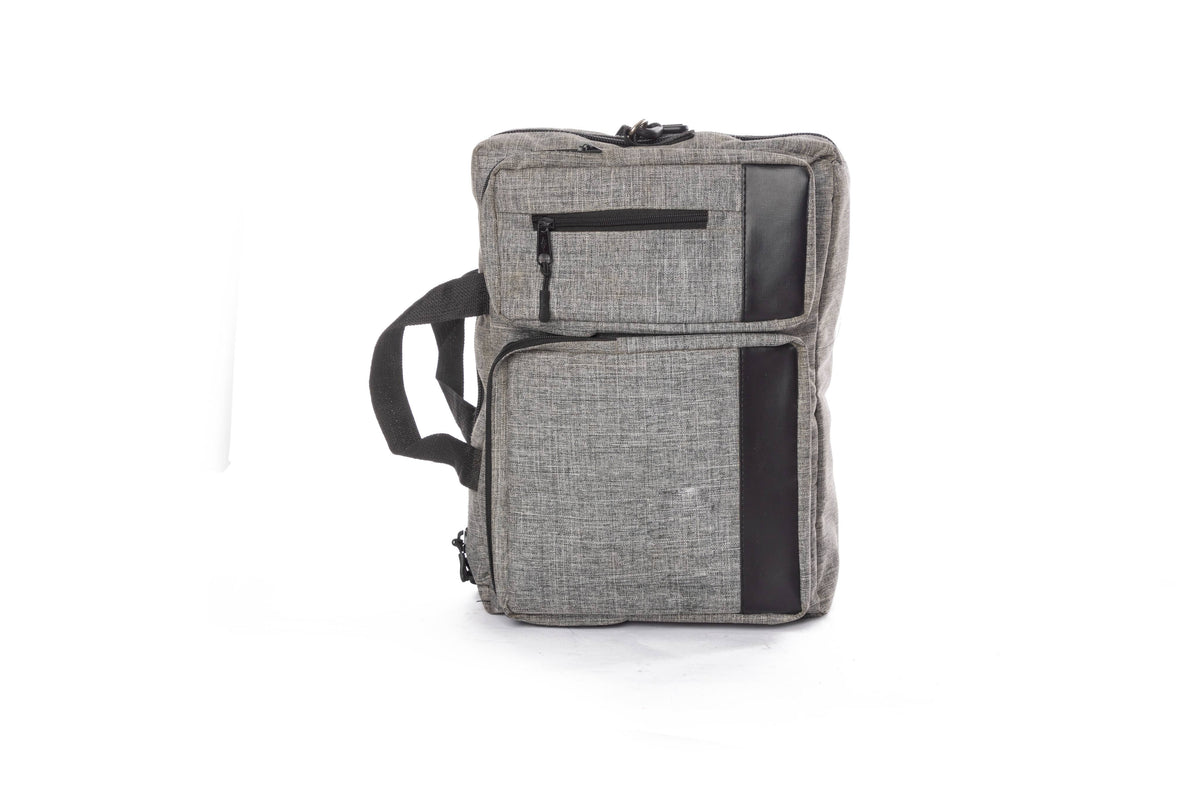
The single most common reason a laptop bag gets returned is that it fits the screen but not the machine. A laptop is sold by the diagonal measurement of its display. A bag has to hold a three-dimensional object with a lid, a hinge, feet and a rubber bumper. Those two numbers are not the same measurement, and nobody tells you that at the point of buying.
Here is the short version: measure your laptop's width, depth and thickness in centimetres, add about 1 cm to each, and compare that with the internal dimensions listed on the bag's product page. If the page only gives you a screen size, treat it as a guide rather than a guarantee.
Laptop bag size chart (cm)
Typical closed-laptop sizes and the minimum inside size of the laptop compartment to look for. Models vary, so always measure your own machine.
| Laptop screen | Typical laptop size (W × D × H) | Bag laptop compartment, at least |
|---|---|---|
| 13–13.3 inch | 30–31 × 21–22 × 1.5–2 cm | 32 × 23 × 3 cm |
| 14 inch | 32–33 × 22–23 × 1.7–2.2 cm | 34 × 24 × 3.5 cm |
| 15.6 inch | 35.5–36.5 × 24–26 × 2–2.5 cm (gaming: up to 3 cm) | 38 × 27 × 4 cm |
| 17–17.3 inch | 39.5–41 × 27–29 × 2.5–3 cm | 42 × 30 × 4.5 cm |
Why screen size is a poor guide
Two 15.6-inch laptops can differ by three centimetres in width and by more than double in thickness. A thin aluminium ultrabook and a gaming laptop with a cooling system are both "15.6-inch" machines. Only one of them slides into a slim padded bay without a fight.
Screen size also ignores the bezel. A modern 14-inch laptop with almost no border around the display can have the same body width as an older 13-inch machine with a thick bezel. Manufacturers have been shrinking bezels for a decade, which means the relationship between "inches" and "centimetres of bag" keeps drifting.
How to measure your laptop in ninety seconds
- Close the lid. Every measurement below is of the closed machine.
- Width — the long edge, left to right.
- Depth — front edge to hinge.
- Thickness — the tallest point, which is usually the hinge end, not the front.
- Add 1 cm to each. That is the room a padded sleeve needs to take the machine without you forcing it.
If you carry a charger, a mouse and a cable pouch, add their thickness too. A bag rated for a 15.6-inch laptop that is full of accessories behaves like a bag one size smaller, because the padded bay has to compress to make room.
What a laptop bay actually needs
Padding is not decoration. Three things matter more than the number of millimetres of foam:
- A raised base. The bottom of the laptop compartment should sit above the bottom of the bag. When you put a bag down, the impact goes into the base of the bag — a suspended bay keeps the laptop out of that impact zone. This is the single most important feature and the one most often missing.
- A closure on the bay itself. A velcro strap or a zip, so the machine cannot slide out when the bag is tipped or the main zip is open.
- A snug fit. A laptop that slides around inside a too-large bay takes more damage than one held still, because it gains momentum before it hits anything.
Sleeve, bay, or both?
A padded bay inside a backpack is enough for daily commuting. A separate laptop sleeve earns its place in three situations: when you want to pull the laptop out and carry it alone into a meeting; when you move the machine between two different bags; and when the bag you love does not have a proper suspended bay, in which case a sleeve gives you one.
Using both is not overkill for anyone who commutes on a motorbike or a crowded bus. It is the cheapest insurance available for a machine that costs more than the bag.
The sizes people actually carry
- 13 to 14 inch. The commuter sweet spot. Most convertible backpacks that also work as a messenger are built around this size, which is why they stay slim enough to wear to a meeting.
- 15.6 inch. The most common size in Pakistan and the one most bags quote. Check the thickness figure especially — this is where gaming machines catch people out.
- 17 inch. Genuinely difficult. Very few bags take one properly, and the ones that do are large enough that you will notice on a bike. Measure before you buy, without exception.
Before you click buy
Read the internal dimensions on the product page, not the headline size. If the bag is going to carry a charger and a water bottle as well, look for those to be in separate pockets rather than loose against the laptop — a charger brick pressed against a screen for an hour a day is how screens develop pressure marks.
Every bag in the backpacks and laptop bags range is built around a padded laptop bay, and the dimensions are listed on each product page. If you are unsure whether your machine will fit, message us with the model name before you order — it takes a minute and saves a return.