People choose a bag shape by how it looks and then live with how it carries. It is worth doing that the other way round. The four common shapes distribute weight in genuinely different ways, and the right one depends on three things: how much you carry, how far, and on what.
Two straps split the weight across both shoulders and let your spine stay vertical. That is not a marketing claim, it is geometry: a single-strap bag pulls one shoulder down and your body compensates by leaning, which is why a heavy messenger bag makes your neck ache and a heavy backpack does not.
Choose it when you carry a laptop plus a charger plus anything else, walk more than ten minutes, or ride a motorbike or bicycle. Above about four kilos, a backpack stops being a preference and starts being the only sensible option.
Its weakness is access. Everything is behind you, so getting one item out means taking the whole bag off. Good backpacks fight this with a quick-access top pocket; look for one.
A single strap across the body, bag sitting at hip height. You swing it forward, open it, take out what you need, swing it back — without stopping walking. That is the whole argument for the shape and it is a strong one for anyone in and out of meetings, taxis or classrooms all day.
It also reads more formal. A messenger bag walks into a client meeting in a way a backpack does not, which is unfair but true.
Its weakness is that single strap. Under load it is uncomfortable within twenty minutes and unhealthy within a year of daily use.
A convertible backpack-messenger has both sets of straps and switches between them. It is not a compromise design, it is a solution to a specific daily problem: you want the backpack for the commute and the messenger for the office. Ride in with it on your back, arrive, switch the strap, walk into the meeting.
If your day has two modes, this is the shape that stops you owning two bags. The convertible backpacks here are built around that switch.
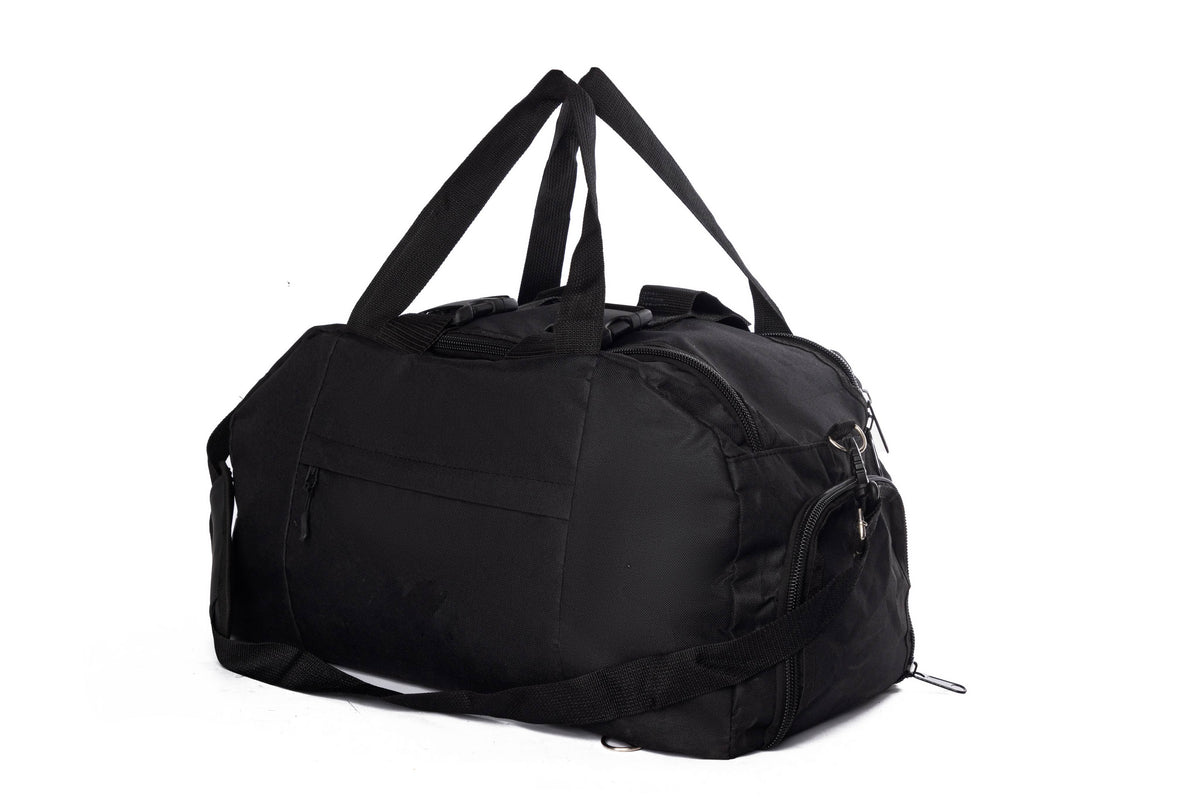
A duffle is a soft rectangle with handles and a long zip along the top. It exists because it is the most efficient way to enclose a large volume with the least structure and weight, and because the full-length opening means you can see everything at once instead of digging.
Choose it for the gym, for two to four nights away, and for anything with an awkward shape — shoes, a helmet, a folded suit. A duffle with a separate shoe compartment solves the single most annoying part of a gym bag.
Its weakness is carrying it far. Hand-carried, a full duffle is unpleasant after a few hundred metres; a shoulder strap and a padded pad make the difference. Check the bag has both. The duffle range is cabin-sized, which is the size that stops you checking a bag in for a short trip.
Phone, wallet, keys, power bank, passport, maybe a small camera. Worn across the chest or the back, it keeps your hands free and your valuables in front of you where you can see them — which is why it has become the default travel bag for anyone moving through crowds.
Choose it as a second bag rather than a first: it is what you carry when the big bag is at the hotel, or what rides inside the big bag on the way there. Slings, sleeves and camera inserts are all in the same range here.
One rule that survives all four: buy for the load you carry on a normal Tuesday, not the biggest load you can imagine. An oversized bag gets filled, and a filled bag gets heavy.