Sac à dos, besace, sac de voyage ou sling : lequel convient vraiment à votre façon de bouger ?
On choisit souvent la forme d'un sac pour son allure, puis on subit la façon dont il se porte. Mieux vaut faire l'inverse. Les quatre formes courantes répartissent le poids de manière réellement différente, et la bonne dépend de trois choses : combien vous portez, sur quelle distance, et avec quel moyen de transport.
Sac à dos — pour la charge
Deux bretelles répartissent le poids sur les deux épaules et gardent votre colonne bien droite. Ce n'est pas un argument marketing, c'est de la géométrie : un sac à une seule sangle tire une épaule vers le bas et le corps compense en se penchant, c'est pourquoi une besace lourde donne mal au cou et un sac à dos lourd, non.
Choisissez-le quand vous portez un ordinateur portable, un chargeur et tout le reste, que vous marchez plus de dix minutes, ou que vous roulez à moto ou à vélo. Au-delà d'environ quatre kilos, le sac à dos n'est plus une préférence mais la seule option raisonnable.
Son point faible, c'est l'accès. Tout est dans votre dos, donc sortir un seul objet oblige à retirer tout le sac. Les bons sacs à dos compensent avec une poche supérieure à accès rapide ; cherchez-en une.
Besace — pour l'accès
Une seule sangle en travers du corps, le sac à hauteur de hanche. Vous le faites glisser devant vous, l'ouvrez, prenez ce qu'il vous faut et le remettez en place — sans cesser de marcher. C'est tout l'intérêt de cette forme, et c'est un argument solide pour quiconque enchaîne réunions, taxis ou salles de cours toute la journée.
Elle a aussi un aspect plus formel. Une besace entre dans un rendez-vous client là où un sac à dos détonne, c'est injuste mais c'est ainsi.
Son point faible, c'est cette sangle unique. Chargée, elle devient inconfortable en vingt minutes et mauvaise pour la santé après un an d'usage quotidien.
Le convertible — pourquoi il existe
Un sac à dos-besace convertible possède les deux types de sangles et passe de l'un à l'autre. Ce n'est pas un compromis, c'est la réponse à un problème quotidien précis : vous voulez un sac à dos pour le trajet et une besace pour le bureau. Arrivez avec le sac sur le dos, changez de sangle, entrez en réunion.
Si votre journée a deux modes, c'est la forme qui vous évite de posséder deux sacs. Les sacs à dos convertibles proposés ici sont conçus autour de cette transformation.
Sac de voyage (duffle) — pour le volume
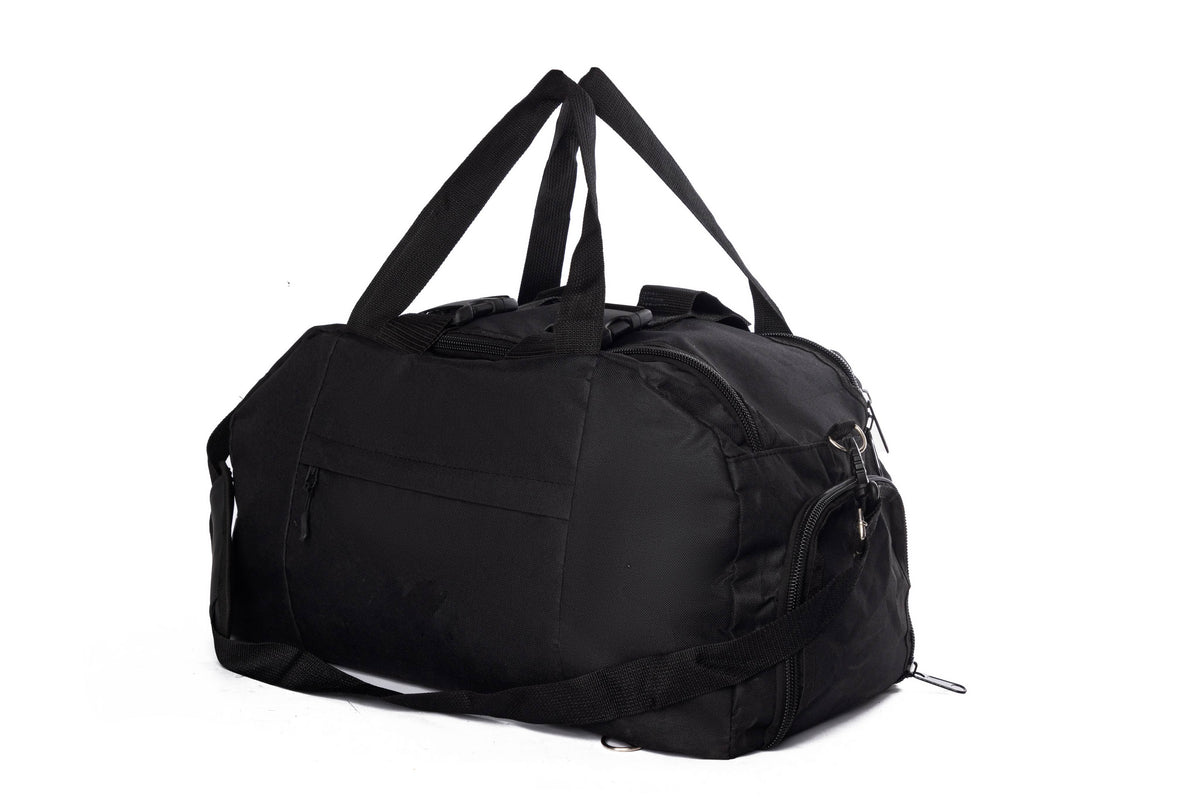
Un duffle est un rectangle souple avec des poignées et une longue fermeture éclair sur le dessus. Il existe parce que c'est la manière la plus efficace d'enfermer un grand volume avec un minimum de structure et de poids, et parce que l'ouverture sur toute la longueur permet de tout voir d'un coup au lieu de fouiller.
Choisissez-le pour la salle de sport, pour deux à quatre nuits d'absence, et pour tout ce qui a une forme encombrante — chaussures, casque, costume plié. Un duffle avec compartiment séparé pour les chaussures règle le défaut le plus agaçant d'un sac de sport.
Son point faible, c'est de le porter longtemps. Porté à la main, un duffle plein devient pénible après quelques centaines de mètres ; une bandoulière et une épaulière rembourrée font toute la différence. Vérifiez que le sac possède les deux. La gamme de duffles est au format cabine, la taille qui vous évite d'enregistrer un bagage pour un court voyage.
Sling et sac bandoulière — pour l'essentiel
Téléphone, portefeuille, clés, batterie externe, passeport, peut-être un petit appareil photo. Porté sur la poitrine ou dans le dos, il libère vos mains et garde vos objets de valeur devant vous, sous vos yeux — c'est pourquoi il est devenu le sac de voyage par défaut pour circuler dans la foule.
Choisissez-le comme second sac plutôt que comme premier : c'est celui que vous portez quand le grand sac est à l'hôtel, ou celui qui voyage à l'intérieur du grand sac à l'aller. Slings, housses et inserts pour appareil photo sont tous dans la même gamme ici.
Une façon rapide de décider
- Ordinateur portable et une journée complète d'affaires, tous les jours — sac à dos, ou convertible si vous assistez aussi à des réunions.
- Ordinateur portable, trajet court, cadre formel — besace ou convertible.
- Sport, week-end, voyage en cabine — duffle.
- Juste l'essentiel, mains libres — sling.
Une règle vaut pour les quatre : achetez pour la charge que vous portez un mardi ordinaire, pas pour la plus grosse charge imaginable. Un sac trop grand finit rempli, et un sac rempli devient lourd.